
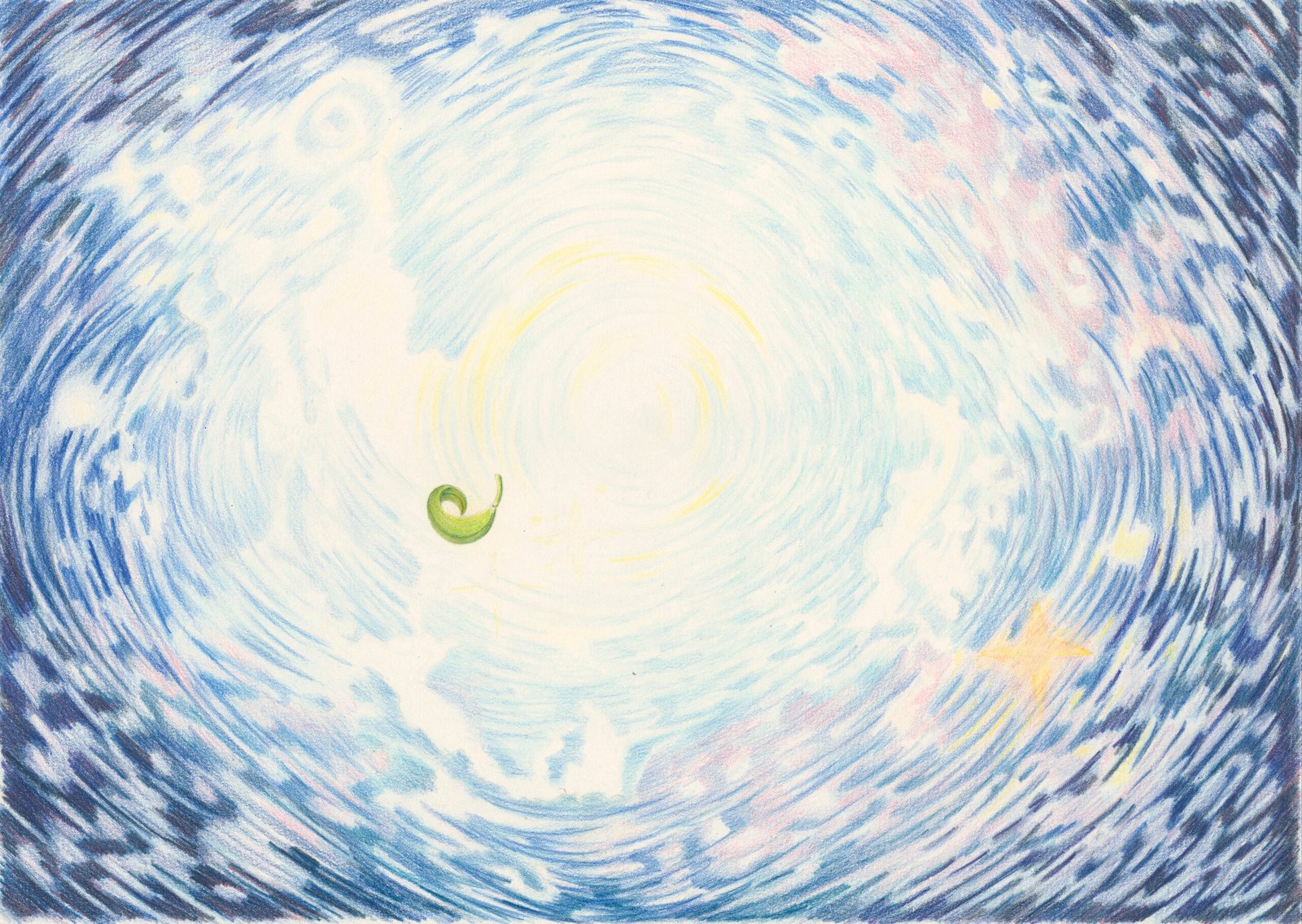
Even though I didn’t write Worlds Within Worlds for children, parts of the book do have an innocence about them which could mislead readers at first glance into thinking that this is a children’s picture book. However the themes and messages woven into the text are more complex and layered than first meets the eye.
This doesn’t mean that children couldn’t enjoy the book. The images and even some of the poetic verses could be wonderfully engaging for children between the ages of 5 and 10. I would imagine reading some versus and talking about the pictures together with a caring, sensitive adult could be very heartfelt and meaningful for this age group. Older children and teens may very possibly enjoy reading the book on their own in bits and pieces, and some even in its entirety from cover to cover. Children and adults may be captivated by the personified leaf, Mother earth and the anthropomorphised cat and parrot, which is why at a more literal level, the book could appeal to people of all ages.
The journey beneath the story
However, the themes in this book include the deeper mysteries that we are confronted with about existence, the existence of life, and how life dies only to be reborn over and over again. Even though the main character, Flavio, is a personified leaf with somewhat of a naïve quality, this epic poem should not be mistaken for “a tale of a little lemon leaf”. Rather than being about the character, who admittedly belies a gentle and whimsical personality, Worlds Within Worlds is more about the journey that Flavio travels, where it takes him, and where it takes us as readers. And while his roaming takes place in the physical world, his travels are a metaphor for an inner pilgrimage and discovery of love, loss and transformation.
Flavio’s journey to the worlds that emerge within the liminal space between worlds, was a way to express my own crossing beyond the passages of time and space from life to death with Warren from the moment he died. Known by Buddhists as “the Bardot”, or by the Irish as “thin times” this passage captures the mysterious nature of life that embodies the transcendent birth-death-life cycle.
Grief, loss and the people we carry
I don’t think that any of us reach our midlife without saying goodbye to someone with whom we have deeply shared, a grandparent, a parent, a sibling, a friend, an animal companion, a plant or a part of nature, a job, a house and even a part of ourselves. These transitional moments in life are reminders that death is part of a bigger life cycle. But when we lose someone really close, this can have the effect of transporting us to a different understanding about what it even means to be alive, what death really is, who we are in relation to ourselves, in relation to others and in relation to the greater cosmic field.
Grief is complex, and a significant dimension of grief in Worlds Within Worlds is the grief that I have been experiencing in relation to the planet, or Mother earth as I call her in the poem. Being the source of all life, this grief is especially shattering perhaps because of the guilt and helplessness that I feel in not being able to do more to prevent the devastation and destruction that has been beset upon her.
Perhaps there is a parallel at a very personal level for me also between the grief of losing Warren and the grief of watching the suffering of Mother Earth. Not only did Warren and I spend many hours in nature, loving her beauty, not only did we see each other as her children, but for me personally, in the same way that I feel helpless to save Mother Earth, the grief of not being able to help Warren enough to have prevented his death carries a similar sadness.
However, one of the great understandings that unfolds throughout the book as that we are not the puppeteers of our lives or that of any other, including Mother earth. Perhaps life on earth presents us with the gift of connection to the spirit of Mother earth to bring a consciousness to the multidimensional experience of existence within the greater cosmic field.
Shakespeare expresses something of this sentiment in his play “As You Like It”.
“All the world’s a stage and all the men and women merely players.
They have their exits and their entrances and one man in his time plays many parts”
(As you Like It, Act 2 Scene 7)
Worlds Within Worlds is available now in the shop.